

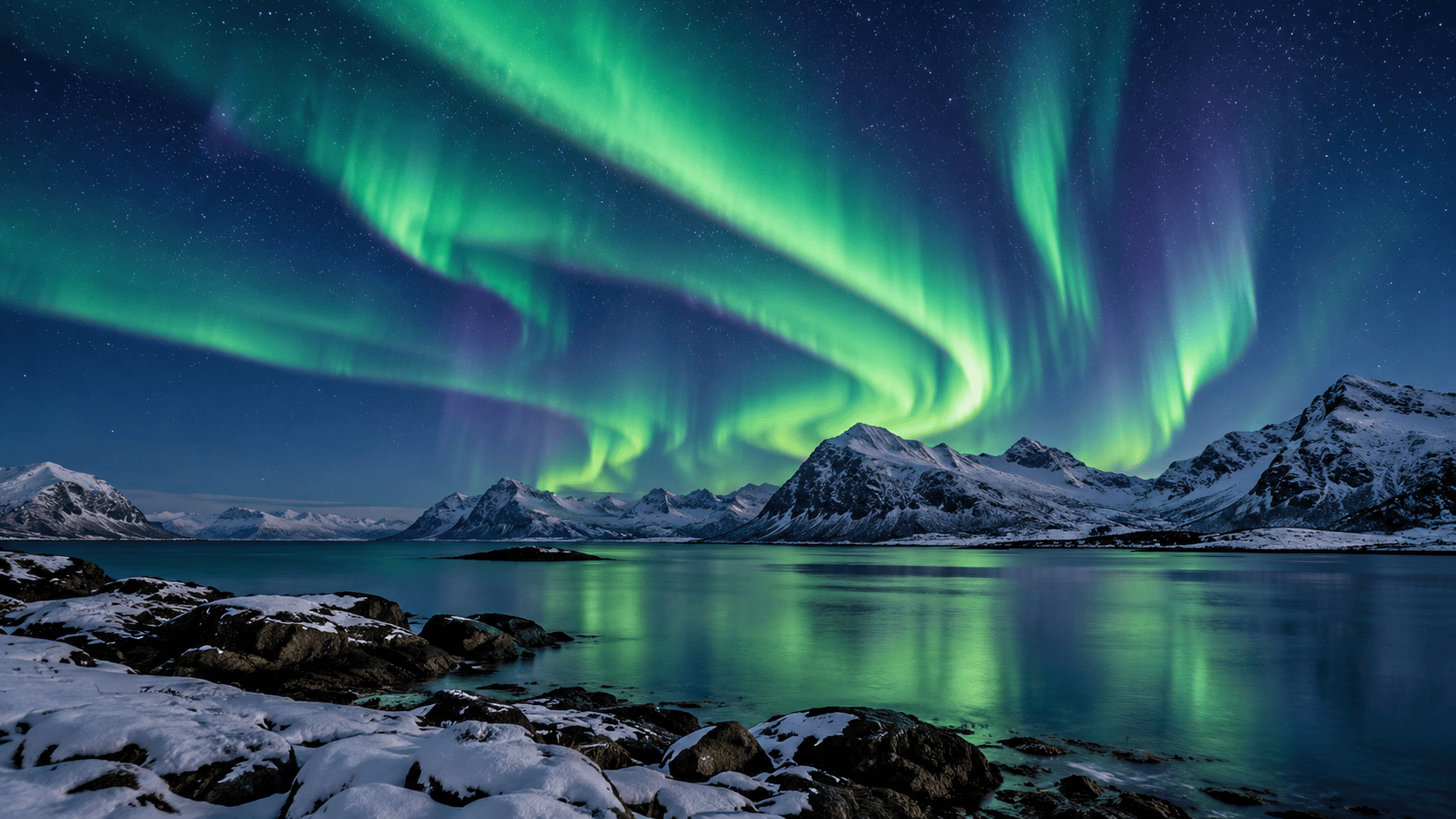
Best Places to See Northern Lights: Where and When to Go
The best places to see northern lights include northern Norway, Swedish and Finnish Lapland, Iceland, Alaska and Canada’s Northwest Territories. Choosing the right base comes down to your travel dates, flight connections and what you want to do during the day.
For an initial shortlist, compare trips between September and March, then check the viewing season at your chosen destination. Some locations offer opportunities from late August or into April. November and December can work for a winter holiday, but longer nights do not guarantee clear skies or an aurora display.
Give your trip several possible viewing evenings rather than making everything depend on one night. That leaves room to adjust your plans when clouds or changing conditions affect a tour.
Have your internet connection ready when you land. You may need it to find your accommodation, confirm a tour meeting point or check an updated weather forecast. Before departure, check whether your mobile plan covers the destination. If you need travel data, compare VIA eSIM plans for your route. Check the included destinations, data allowance and validity, then install the eSIM on a compatible phone while you have a stable connection and follow the activation instructions.
Where are the best places to see northern lights?
Start with these six destinations, then compare the route and type of stay that suit you:
- Tromsø, Norway: A city base with organised Northern Lights tours that can travel beyond the city to look for clearer skies.
- Abisko, Sweden: A destination in Swedish Lapland for a trip focused on aurora viewing.
- Finnish Lapland: A region to consider when you want aurora evenings alongside a winter holiday in northern Finland.
- Iceland: An option for combining Northern Lights viewing with daytime sightseeing.
- Fairbanks, Alaska: A base with tours and accommodation geared towards aurora viewing.
- Yellowknife, Canada: A destination in the Northwest Territories to consider for an aurora-focused Canadian trip.
No destination guarantees a sighting. You need enough darkness, a sufficiently clear view of the sky and auroral activity visible from your location. Check the local cloud forecast alongside the aurora forecast, and include daytime plans you will enjoy even if an evening is cloudy.
Tromsø, Norway: Northern Lights Tours from a City Base
Tromsø is a good choice if you want to stay in a city and join guided evening excursions. The region sits beneath the auroral oval, and tours can travel beyond the city to search for clearer skies.
When comparing accommodation, check the distance to your tour’s meeting point and how you will return afterwards. Do not assume that hotel collection and drop-off are included. Choose a location that works for both your daytime plans and late-night return.
If you need mobile data for meeting-point directions or messages from your guide, compare VIA eSIM’s Norway plans before departure.
When can you see northern lights in Tromsø?
Organised Northern Lights tours usually run from September to early April. Sightings can occur from late August to early April when there is enough darkness and the sky is sufficiently clear.
For a November or December trip, expect limited daylight. Tromsø’s polar-night period lasts roughly from late November to late January, although daytime still brings twilight. Plan outdoor sightseeing around the available light and leave your evenings flexible for aurora viewing.
Which type of Northern Lights tour should you choose?
A Northern Lights chase travels by car, minibus or bus, with the main aim of finding a suitable viewing location. Other experiences may combine aurora watching with an activity or a stay at a base camp. Some use a fixed location, which changes how much flexibility they have to move when clouds arrive.
If the aurora is your main reason for travelling, prioritise a tour whose main purpose is searching for viewing conditions. Check the description and ask what happens if the weather changes.
Before booking, confirm:
- The group size, expected duration and transport arrangements.
- Whether thermal clothing, food and photographs are included.
- The meeting point, return location and availability of toilets.
- The cancellation terms and what the booking includes if no aurora appears.
The official Visit Tromsø guide explains the season and the differences to check when choosing a tour.
For your itinerary, consider booking an excursion early in your stay and keeping another evening available. Check availability in advance, especially for smaller tours during busy winter periods.
Can you see northern lights from Tromsø itself?
Yes, on clear nights the aurora may be visible from Tromsø, including darker spots such as Prestvannet. Bright city lights can make viewing harder. A guided trip outside the city gives you access to other locations when local cloud cover is unfavourable.
Abisko, Sweden: A Northern Lights Stay by the National Park
Abisko suits travellers who want to base their trip around aurora viewing in Swedish Lapland. Abisko National Park lies about 100 kilometres west of Kiruna, so choosing where to sleep is an important part of planning your evenings.
Compare a stay in Abisko with a Kiruna-based itinerary before booking. Include accommodation, tours and return transport in the total cost, and check where your evening activities start.
When should you visit Abisko for northern lights?
September to late March is the main planning window for Arctic Sweden, with occasional sightings continuing into early April. Check the dates of the activities you want to book, because the regional viewing season and an individual attraction’s opening calendar are different.
For a November or December trip, confirm your accommodation and evening activity dates before arranging the rest of the route.
Do you need to visit Aurora Sky Station to see the lights?
No. Northern Lights can also be seen from ground level in Abisko. The Swedish Tourist Association states that viewing chances can be just as good at the tourist station as on Mount Nuolja.
Aurora Sky Station adds an elevated viewpoint, a viewing terrace and an organised experience reached by chairlift. Choose it if those features are part of the evening you want. The journey uses an open-air chairlift, so prepare for time outdoors as well as time at the station.
Check the official Aurora Sky Station Night Visit for current dates and inclusions. The operator describes an alternative programme in the national park during severe weather. Read the booking terms so you understand how weather can affect the chairlift and what your reservation covers.
How do you get to Abisko, and where should you stay?
You can reach the area by rail, road or an arranged transfer from Kiruna. The railway station inside the national park is called Abisko Turist. Confirm the correct stop with your accommodation, particularly if you are carrying luggage and arriving after dark.
Keep your transfer details and accommodation’s contact number saved on your phone. For mobile data during the stay, you can compare eSIM plans for Sweden from VIA eSIM.
Transfers from Kiruna Airport and the city are available through local operators, but services and departure times vary by season. Check your exact travel date and flight arrival time before booking a connection.
A stay in Abisko can help you organise evenings around nearby activities and viewing locations. If you stay in Kiruna, confirm the return journey after any Abisko excursion. Compare the total cost of the hotel and transport, and allow enough time between arrival and your first booked activity.
Finnish Lapland: Rovaniemi, Inari and Glass Igloo Stays
Finnish Lapland is a good choice if you want a winter holiday with Northern Lights excursions and a choice of distinctive places to stay. The main viewing season runs from late August to early April, so November and December fall within the window.
Your first decision is where to base yourself. Rovaniemi, Inari and Saariselkä offer different ways to organise the trip, and the accommodation you choose can shape both your evenings and your transport costs.
Should you choose Rovaniemi or northern Lapland?
Rovaniemi suits a trip that combines aurora excursions with Santa Claus Village and a city base. It is particularly relevant if Christmas experiences are part of your reason for travelling. Plan an evening away from bright artificial lighting, whether independently at a suitable local spot or with a guide.
The lights can sometimes be visible from Rovaniemi itself, especially during a bright display. However, a hotel’s city address should not be your only criterion when choosing where to watch.
Inari and Saariselkä are northern alternatives worth comparing for a stay centred on nature and aurora evenings. Inari brings together Lake Inari and Sámi culture, while Saariselkä offers another base for exploring northern Lapland.
For these destinations, look at flights to Ivalo Airport and check the onward transfer to your exact accommodation. Compare the full route, including arrival time, transfer availability and meals, before deciding which stay fits your budget.
An eSIM for Finland from VIA eSIM is an option to consider for mobile data when checking transfer updates, finding your accommodation or messaging your tour organiser.
Can you see northern lights from a glass igloo?
A glass-roofed cabin can let you watch the aurora from indoors when the sky is clear and a display is visible from your room. The cabin’s position and view matter, so ask about surrounding lights, trees and how the glass is kept clear in winter.
Visit Finland’s guide to glass cabins and aurora hotels includes examples around Rovaniemi and Inari. Glass-roofed accommodation is an option to compare alongside a conventional hotel and guided evening excursions.
Before paying for a special room, check whether airport transfers, meals and aurora alerts are included. Choose a cabin you would enjoy spending time in during a cloudy evening as well.
If you want to manage the cost, compare one night in a glass cabin plus other nights in standard accommodation with the price of a full cabin stay. Include the extra transfer or luggage arrangements that changing accommodation may require.
Iceland: Reykjavík as a Base for Northern Lights and Day Trips
Iceland suits travellers who want to combine northern lights evenings with sightseeing during the day. Staying in Reykjavík gives you access to cafés, museums and organised excursions, without needing to change accommodation each night.
Plan around September to April. Iceland’s broader viewing season can begin in late August, once sufficient darkness returns. November and December fall within that season, but cloud cover and winter weather still affect what you can see and where you can travel.
Can you see the northern lights in Reykjavík?
Yes, northern lights can be visible in Reykjavík when it is dark, skies are clear enough and aurora activity allows. However, streetlights and bright buildings make faint displays harder to see.
Look for an accessible viewing area away from the brightest parts of the city, with an open view of the sky. You do not necessarily need a long journey across Iceland. Tours from Reykjavík can head towards darker surroundings, including areas near Þingvellir National Park, according to that evening’s conditions.
Keep daytime plans worthwhile too. Museums and cafés give you options between excursions, while Perlan’s Áróra planetarium show offers an indoor way to learn about the aurora on a cloudy day.
Should you book a tour or drive yourself?
For travellers unfamiliar with driving on icy roads after dark, an organised tour is a practical starting point. Compare the meeting location, group size and expected return time. Check what happens if the operator cancels because of the weather, and whether an unsuccessful outing qualifies for another attempt.
Driving yourself offers flexibility, but your route needs to suit your experience and the conditions. Check weather warnings and the Icelandic Road and Coastal Administration’s current road information before departure. An open road can still be difficult in winter. Use designated parking areas for viewing and leave room to change your plans.
How do you read Iceland’s northern lights forecast?
Use the Icelandic Meteorological Office’s aurora forecast to check cloud cover for your intended location and viewing time.
For checking forecasts away from accommodation Wi-Fi, compare VIA eSIM’s Iceland data plans. Download your route maps before setting out in case mobile reception is limited.
On this map, green means cloudy and white means clear sky. Move the time selector to the evening you are planning, and read the cloud forecast alongside the aurora activity forecast.
A high activity forecast cannot make an aurora visible through thick cloud. Check conditions again before going out. The forecast helps you plan, but sightings remain unpredictable.
Fairbanks, Alaska: Northern Lights Lodges and Late-Night Viewing
Fairbanks is a strong choice for a trip centred on seeing the northern lights in the United States. Its position beneath the auroral oval is one reason the area has a wide choice of dedicated viewing tours and accommodation.
The local aurora season runs approximately from 21 August to 21 April. November and December are within that window, but prepare for very cold weather and evenings that can continue well beyond midnight.
Should you stay in Fairbanks or at an aurora lodge?
A hotel in Fairbanks can work well if you want to arrange separate evening excursions. A lodge outside town may suit you if spending your evenings close to a viewing area is the main purpose of the trip.
The Cleary Summit area has accommodation and organised viewing options, while Chena Hot Springs is another destination to consider when you want to include a geothermal soak. Check the transfer arrangements for your chosen property, especially if you will not have a car.
A heated waiting space is a useful feature to look for in a winter aurora experience. Some tours use cabins, yurts or lodges where you can warm up between periods outside. Ask whether that space is available throughout the outing, whether suitable winter clothing is provided and whether staff alert guests when a display appears.
A lodge booking and an evening viewing ticket can cover different services. Confirm exactly what your reservation includes.
When arranging travel data, check whether VIA eSIM’s USA plans include Alaska and support your intended route around Fairbanks. Ask about local coverage before relying on mobile data at a remote lodge or viewing site.
What time should you plan to watch?
Allow for a late night. The University of Alaska Fairbanks Geophysical Institute identifies roughly 9 pm to 3 am in winter as a useful viewing window in Interior Alaska, with the hours around midnight particularly relevant. Displays can also occur outside those hours.
Avoid filling the following morning with an early departure or a tightly timed excursion. If your accommodation offers aurora wake-up calls, ask how the service works at check-in.
Do you need a high Kp forecast in Fairbanks?
No. A high Kp number is not a requirement for seeing aurora in Fairbanks. Kp describes global geomagnetic activity, and local auroral activity can differ.
Use the University of Alaska Fairbanks aurora forecast alongside local weather information and its live-camera links. A low Kp reading alone should not rule out viewing when local conditions are suitable. Darkness, cloud cover and what is happening above your location still matter.
Yellowknife, Canada: Winter Aurora Tours and Dene Cultural Experiences
Yellowknife is a Canadian destination to consider when northern lights viewing is the main reason for your trip. The capital of the Northwest Territories lies beneath the auroral oval, with organised excursions and viewing sites around the city.
It also offers opportunities to experience the region through Indigenous-led tours, including evenings that bring together aurora watching, Dene storytelling and traditional food.
Is November or December a good time to visit Yellowknife?
The second half of November and December fall within Yellowknife’s main winter aurora season, which continues into early April. Northwest Territories Tourism also highlights an autumn viewing season from around mid-August to the end of September.
These are planning windows, and individual operators may run on different dates. If you are considering early November, confirm the availability of your preferred tours before booking the rest of the trip.
Winter brings long nights and very cold conditions. Check whether your package includes rental winter clothing, and confirm the available sizes and equipment before departure.
Should you choose aurora hunting or a fixed viewing site?
An aurora hunting tour travels by vehicle to look for suitable viewing conditions. This format suits travellers who want guides to adjust the route according to local cloud cover.
A fixed viewing site centres the evening on one location, with facilities that may include heated cabins or teepees. Ask how the operator manages cloudy conditions and what is included while you wait.
When comparing packages, count the actual viewing evenings. Three nights of accommodation do not necessarily include three guided aurora outings. Confirm hotel collection, return transport and the amount of time allocated to each evening.
For your connection arrangements, review VIA eSIM’s Canada data plans and confirm coverage in Yellowknife and at any camp or lodge on your itinerary. Save booking details and meeting-point directions for offline access too.
Can you combine aurora viewing with Dene culture?
Yes. Indigenous-owned operators around Yellowknife offer aurora experiences led by Dene guides. For example, B. Dene Adventures hosts visitors at a cultural camp near Dettah, with programmes that can include storytelling, drumming and local food.
Destination Canada’s guide to Indigenous-led aurora trips in Yellowknife explains examples of mobile aurora hunting and cultural camp experiences.
Choose according to what you want from the whole evening. A cultural programme gives you time with local hosts and an opportunity to learn about the place you are visiting, including on an evening when the aurora stays out of sight. Confirm the current programme and seasonal dates directly with the operator.
When Is the Best Time to See Northern Lights?
September and March are worth comparing for an aurora-focused trip because geomagnetic activity tends to increase around the autumn and spring equinoxes. November to February offer longer winter nights, with less daylight for sightseeing in far-northern destinations.
That seasonal tendency cannot predict the display on your travel dates. Use it to shortlist months, then check the regional viewing season, available tours and the activities you want to include.
Which month suits your trip?
- September: Consider it if you want autumn scenery and aurora evenings without making a deep-winter holiday the focus. Check when darkness returns and your preferred operator begins its season.
- November and December: These months suit a trip built around winter experiences or Christmas activities alongside aurora viewing. Plan daytime outings around the available light, particularly in places such as Tromsø and northern Finnish Lapland.
- February and March: Compare these months if you want a winter trip with increasing daylight for excursions. March also falls around the spring equinox, but cloud cover and local conditions still determine visibility.
For a late-August or April trip, check your exact destination and dates carefully. The viewing season begins and ends at different times across the places in this guide.
What time of night should you look?
The hours around midnight are a useful starting point, often roughly 10 pm to 2 am in local time. Aurora can appear earlier or later, so follow local advice and your guide’s plan.
Check the time zone on any forecast. A chart shown in UTC may refer to a different local evening or hour than you expect.
Do you need to travel around a new moon?
A new moon is helpful for darker skies, but it is not essential for seeing northern lights. Moonlight can make faint auroral features harder to distinguish, while brighter displays can remain visible.
If your dates are flexible, compare the moon phase alongside the destination’s season and your transport options. A clear view of the sky remains necessary whatever the moon phase.
How to Plan a Northern Lights Trip
Start with your chosen destination’s viewing season, then organise the journey around several possible aurora evenings. Allow time for airport transfers, late-night returns and daytime activities you would enjoy even during cloudy weather.
How many nights should you stay?
Consider three to five nights at one base as a practical starting point for an aurora-focused trip. This gives you several evenings to work with, although the weather and auroral activity remain unpredictable.
Count the evenings you can actually use. A late arrival may leave insufficient time to reach a tour’s meeting point, while an early flight home can make an outing on your final night impractical.
When comparing packages, check the number of guided viewing evenings alongside the number of hotel nights. If your main goal is seeing the lights, an extra usable evening is worth considering when deciding how to spend your budget.
Should you stay in one place or visit several?
For a short northern lights break, one well-chosen base is usually the more practical option. Changing destinations takes time for travel, check-in and new transfers, which can reduce your opportunities to go out.
Choose accommodation that works with your evening plans. A city hotel near a tour meeting point and a lodge with viewing facilities offer different ways to organise the stay.
A longer holiday can include several destinations. Give each stop enough time for the activities you want, and check whether travel days leave you available for an evening excursion.
How should you arrange tours and daytime activities?
Book a preferred aurora outing early in your stay and leave another evening available. Reserve popular tours in advance, particularly if you want a small group or are travelling during busy winter periods.
After a late return, give yourself time to rest before the next activity. Museums, local food experiences and shorter outings can help you balance the itinerary.
Read the operator’s terms before relying on a second attempt. A weather cancellation, an outing without a sighting and a guest-requested date change may have different conditions.
What should you do if the forecast is cloudy?
Check the latest local forecast and contact your operator before changing a booking. Cloud above your hotel does not describe conditions across the whole region, and a mobile tour may use another viewing location.
Keep an alternative daytime plan available and follow the operator’s instructions about departures. For independent outings, check the weather and route conditions before leaving.
How Much Does a Northern Lights Trip Cost?
Your total budget should include flights, accommodation, airport transfers and aurora outings, plus meals and any winter clothing you need. Compare these costs for your actual dates before choosing a destination. A cheaper tour does not necessarily mean a cheaper holiday once flights and accommodation are added.
How Much Do Guided Northern Lights Tours Cost?
For a concrete example, Nordic Unique Travels lists its Northern Lights Photography Tour in Rovaniemi from €110 per adult. The operator also warns that groups can be particularly large during the busy December-to-February period.
In Alaska, the official Travel Alaska guide to northern lights tours gives starting prices of around US$100 for a single-night excursion. Multi-day packages with accommodation, meals and activities can reach several thousand dollars.
These examples cover different experiences, so check the duration, group size and inclusions before comparing them. Starting prices were checked on 2 October 2026; confirm availability and the final price for your selected date.
Which Extra Costs Should You Check?
Before booking, add up:
- Flights and baggage: include connecting flights and any luggage charges.
- Accommodation: check whether the advertised amount is per room or per person, and whether breakfast is included.
- Transfers: include airport transport, journeys to remote accommodation and any return transport after an excursion.
- Tour extras: ask whether thermal clothing, boots, photographs, food and hot drinks are included.
- Daily spending: allow for meals, daytime activities and mobile data.
If you want another guided outing, include its cost in advance. Read any repeat-tour offer carefully, including availability and extra charges.
Can You See the Northern Lights Without Paying for a Tour?
Yes. A guided tour is optional if you can reach a suitable public viewing spot safely and conditions allow a sighting. Check access, weather and transport, and respect private land. An independent outing may still involve transport, parking or clothing costs.
Is a Holiday Package Better Value?
Compare a package with separate bookings for the same dates, room type, transfers and number of aurora outings. Check how many viewing evenings are actually included, whether meals and clothing are covered, and whether taxes or compulsory fees are added at checkout.
This gives you a useful total to compare across destinations and helps you choose where to spend your budget.
Northern Lights Travel FAQs
Where Are the Best Places to See Northern Lights?
Tromsø in Norway, Abisko in Sweden, Finnish Lapland, Iceland, Fairbanks in Alaska and Yellowknife in Canada are destinations to compare. Choose according to the local viewing season, your flight connections and the kind of holiday you want.
What Are the Best Months to See Northern Lights?
September to March is a useful planning window for many northern destinations. Geomagnetic activity tends to increase around the spring and autumn equinoxes, making September and March worth considering. Some destinations also offer viewing opportunities in late August or April.
Can You See Northern Lights in November and December?
Yes. November and December fall within the viewing season in many of the destinations in this guide. Long nights provide time to look for the aurora, while cloud cover and local conditions affect visibility. Check tour dates and the daylight available for other activities.
How Many Nights Should You Stay for a Northern Lights Trip?
Three to five nights at one base is a practical starting point. Several evenings give you more opportunities if one night is cloudy. Count the evenings you can actually use, allowing for arrival times, airport transfers and your departure flight.
What Time of Night Is Best for Seeing Northern Lights?
The hours around midnight, often roughly 10 pm to 2 am in local time, are a useful starting point. Aurora can appear earlier or later. Follow local forecasts and your guide’s advice rather than relying on a fixed viewing hour.
Do You Need a Guided Tour to See Northern Lights?
No. You can watch independently from a suitable, accessible viewing spot when conditions allow. A guided tour can help with transport and choosing locations away from bright lights. Check route conditions, access and return arrangements before heading out yourself.
Can You See Northern Lights from a City?
Yes, the aurora can be visible from cities such as Tromsø when conditions are favourable. Choose a darker location with an open view of the sky. Bright urban lighting can make a faint display harder to distinguish.
Can You See Northern Lights from a Glass Igloo?
Yes, if a display is visible through your room’s glass roof and the sky is sufficiently clear. Check the cabin’s position, surrounding lights and how the glass is kept clear. A glass igloo offers indoor viewing but cannot guarantee that the aurora will appear.
Is a Northern Lights Sighting Guaranteed?
No. A sighting depends on darkness, a clear enough view of the sky and auroral activity visible from your location. Choose daytime experiences you would enjoy too, and check the operator’s terms if a tour advertises a repeat outing or refund.